
Micaela Belen Ruiz, PhD
CONICET; Instituto de Diversidad y Ecología Animal; Universidad Nacional de Cordoba (Argentina)
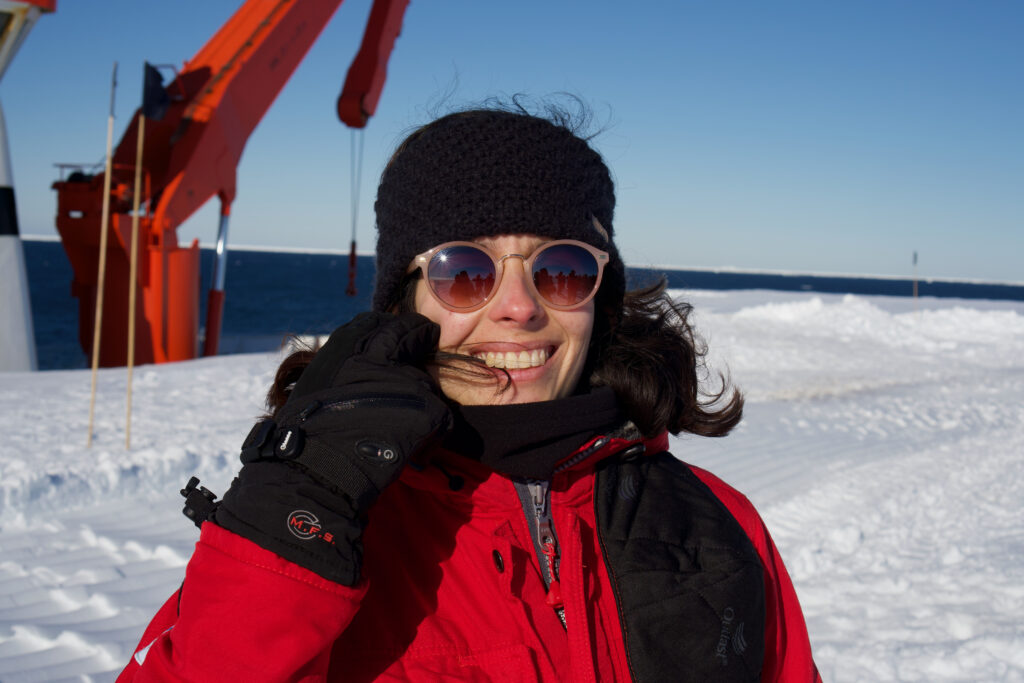
Micaela is in Antarctica on a trip on board of Polarstern, expedition PS134 in 2022/2023. Micaela and team arrived there in front of the German research station Neumayer in order to provide them with food and other resources, after which they continued their trip for 11 weeks in the Southern Ocean.
What’s the work that you do?
My research focuses on understanding the structure, functioning, and resilience of polar marine ecosystems in the face of global change, using advanced molecular tools such as eDNA metabarcoding and transcriptomics. I am particularly interested in how trophic networks and the physiological responses of Antarctic organisms are changing under the pressure of ocean warming and acidification. Additionally, I collaborate on initiatives that promote the integration of multi-omics approaches (genomics, transcriptomics, proteomics, and metabolomics) for the study of polar biodiversity. I believe that combining these tools is essential to understanding the adaptive mechanisms of species living in extreme environments, as well as their capacity to respond to rapid environmental disturbances.
What keeps you going?
What I like about my job can be described in 3 categories: first, expeditions, the magic of being in unreachable places, white snow and full of biodiversity, being able to see the nature in pure state. Second, the scientific questions, explore beyond what is known, keep yourself active and curious about the poles and how climate change may impact the ecosystems adapted to this extreme conditions. Third, meeting people, scientists and field specialists who have experienced the most amazing stories, things that you could never imagine are possible, all about whales, polar bears and the most exotic creatures and conditions.
What’s your message to the world?
The poles are a powerful reflection of what is happening globally due to climate change; the changes in their ecosystems are both visible and profound. Conducting scientific research, asking critical questions, and exploring these regions—then sharing those findings with the world—is essential for raising social awareness and fostering a collective sense of responsibility.
Organisation: CONICET; Instituto de Diversidad y Ecología Animal; Universidad Nacional de Cordoba (Argentina)
Nationality:
 Argentina
Disciplines: