
Lea Kannar-Lichtenberger, MFA/MA, MRSNSW
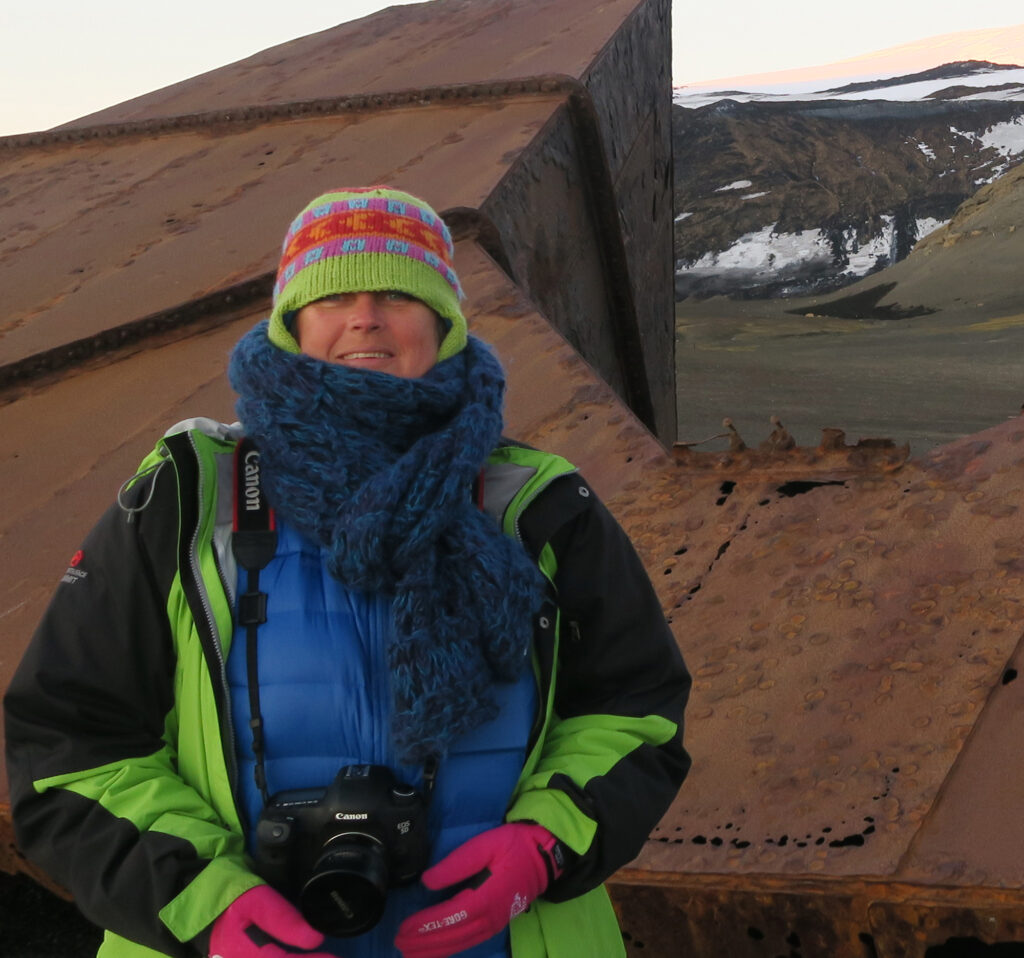
Lea is standing in front of waste equipment on Deception Island, Antarctica (credit Tristan Tyrrell).
What is the work that you do?
I am an expedition-informed environmental artist based in Sydney, Australia, working across sculpture, installation, print media, photography, video and sound. My practice examines human impact on fragile polar and isolated environments. From 2023 to 2026 I joined four consecutive expeditions to both the Arctic and Antarctic, creating artworks and conducting research into the dynamics of humanity’s footprint on these landscapes. I exhibit internationally and in Australia, present research at conferences globally, and have published in peer-reviewed journals.
2025 I was invited to become a member of The Royal Society of NSW (the oldest learned society in the Southern Hemisphere).
What keeps you going?
I believe there is an urgency to shift people’s perspective on how they engage with these environments. The polar regions are the clearest mirror we have of what we stand to lose. What drives me is the deep conviction that art can reach people where data alone cannot — that a sculpture or an installation can shift something in a viewer that a scientific report never will. Every expedition sharpens that belief. Working in these extraordinary, elemental environments reminds me why the work matters, and the urgency I feel there follows me back to the studio and into every exhibition, paper and lecture I deliver.
What’s your message to the world?
The ice doesn’t negotiate. It simply reflects back what we have done — and what we still have time to change. I believe that changing even one person’s mind through art and research can create a ripple effect far beyond what we can imagine. That one conversation, that one moment of recognition in front of a work, can become the beginning of something much larger.
The poles are not remote abstractions for scientists and explorers alone — they are the pulse of a planet we all share, and their fate is inseparable from the choices we make every day as consumers, travellers and citizens. My work asks people to sit with that connection rather than look away from it.
We are living through a moment that will define life on this planet for generations. Art has always had a role in helping people feel the weight of history as it is being made. I want my practice to be part of that — to offer not despair, but a window into what is at stake and, within that, a reason to act. The polar regions have given me that sense of purpose. I hope my work can pass some of it on.
I work to take art into a discussion that will move people beyond the data to the visceral, to the emotional, into their hearts.
Nationality:
 Australia
Disciplines: