
Sandra Lai, PhD
Université du Québec à Rimouski (Canada)
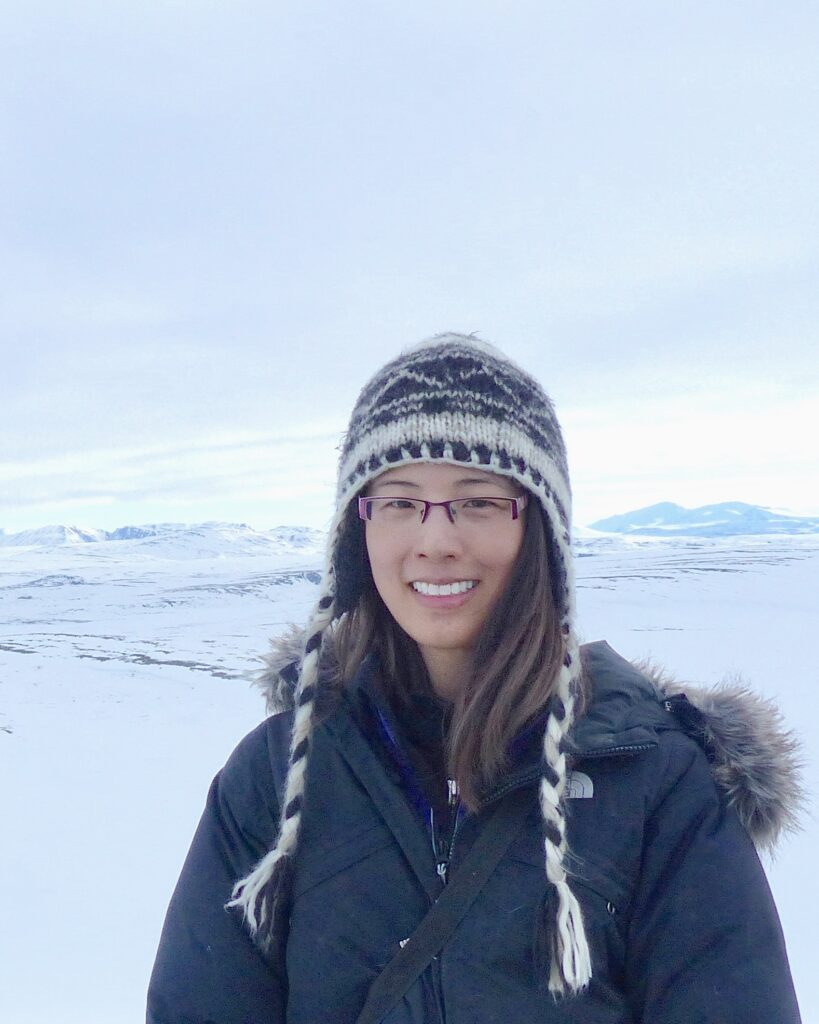
Sandra is standing at Alert, the northernmost permanently inhabited settlement in the world, located on Ellesmere Island in the Canadian High Arctic, just 817 km from the North Pole.
What’s the work that you do?
I am a wildlife biologist working in the Canadian High Arctic. My research focuses on the ecology and adaptability of mammals in extreme environments and what this reveals about ecosystem change, resilience, and conservation. I have studied the movements, behaviour, and survival strategies of Arctic foxes and other northern mammals, alongside broader ecosystem dynamics involving plants and herbivores. Although my work often focuses on predators, I am interested in how species interactions and environmental change shape the functioning and resilience of Arctic ecosystems as a whole.
What keeps you going?
What keeps me going is my deep love for the Arctic. The first time I stepped there, I fell in love with its wildlife, stunning landscapes, and the experience of fieldwork in such remote and extreme places. Being out there on the land and witnessing how life persists in places that seem almost impossible to survive in is the most incredible feeling. I’m also inspired by the people I work with, who share a deep commitment to understanding and conserving the Arctic. Knowing that our research can help protect these vulnerable ecosystems in a rapidly changing climate is a strong motivation.
What’s your message to the world?
The Arctic is often seen as cold, harsh, and distant, but to me it is full of life, stories, and connections. Spending time there, I realised how deeply everything was linked, from the water flowing from glaciers into the sea, to birds migrating across continents each year, and the sea ice returning to reconnect distant lands across the Arctic. We are living through a time of rapid environmental change, and I think there is so much value in slowing down, paying attention, and remaining curious about the natural world. Science helps us better understand these environments, but experiences that inspire awe and wonder are also important in encouraging people to care about wildlife and wild places.
Organisation: Université du Québec à Rimouski (Canada)
Nationality:
 Canada
Disciplines: