Paula Lamprea Pineda, PhD
Ghent University (Belgium)
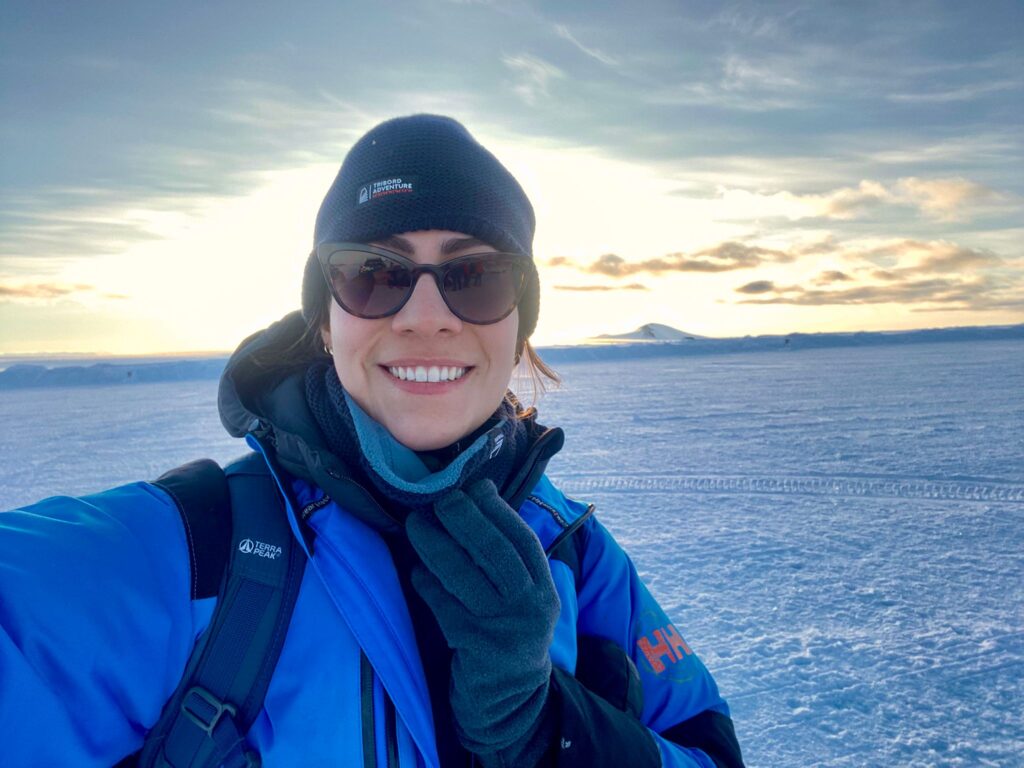
Paula is in front of a white expanse. The picture was taken on December 20, 2023, just after she landed in East Antarctica for the first time.
What’s the work that you do?
I study volatile organic compounds (VOCs) and their oxidation products in the atmosphere. My work includes time-resolved measurements, the development of analytical methods for ultra-trace detection, and coupling these compounds to environmental conditions and atmospheric oxidants. VOCs contribute to tropospheric ozone formation and secondary organic aerosols. The former is a greenhouse gas, while the latter affect the Earth’s radiation budget. Due to their short lifetimes, complex chemistry, and the challenges of polar research, they remain understudied in Antarctica.
Over the last two years, I conducted two campaigns in East Antarctica, deploying custom instruments for automated, year-round sampling of these compounds.
What keeps you going?
Science for the world keeps me going. Understanding environmental processes that impact society -and vice versa- is my main motivation. My work fosters creativity, independence and resilience. It has connected me with brilliant minds and allowed me to explore how human activities can influence even the most remote places on Earth. Working in Antarctica has deepened my sense of responsibility to protect these fragile environments and to contribute to knowledge that can inform better decisions for our planet.
What’s your message to the world?
Research in Antarctica in my field is scarce, challenging and costly, but at the same time essential. I believe knowledge is the foundation of good decision-making, and the more we understand our world, the more we are driven to care for and protect it.
Organisation: Ghent University (Belgium)
Nationality:
 Colombia
Disciplines: