Isabella Lagoa
University of Alaska Fairbanks (USA)
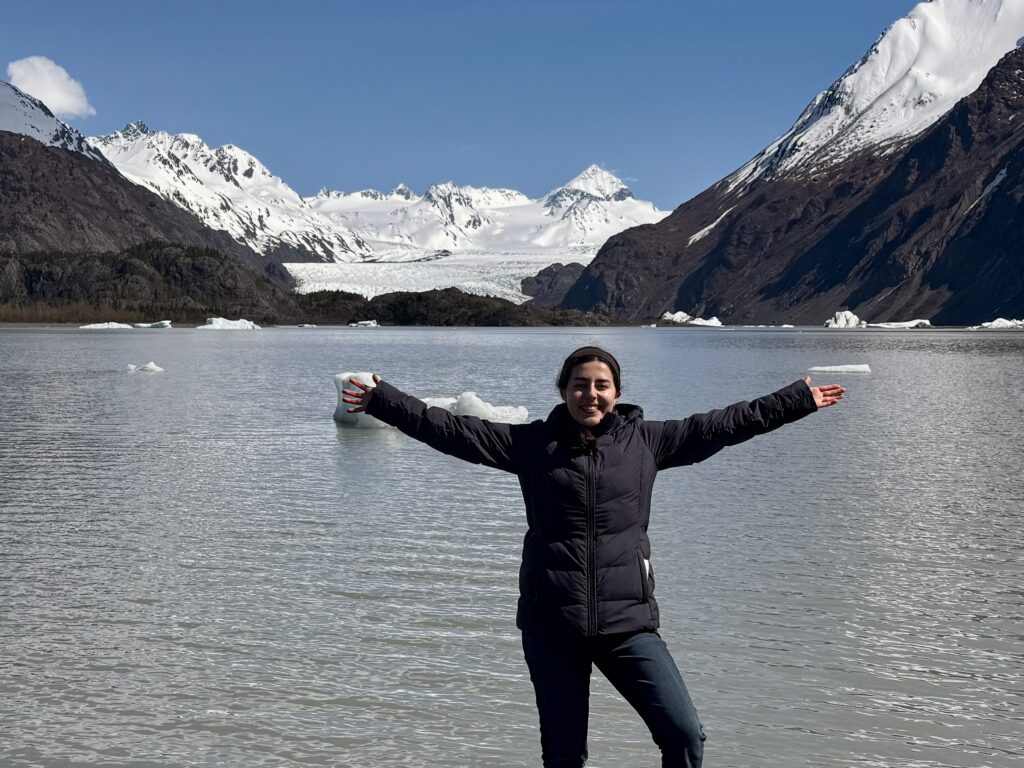
Isabella is standing in front of a lake, with snow-capped mountains and a glacier in the background. The picture was taken at Grewingk Glacier in the Kachemak Bay Wilderness, Homer, Alaska.
What’s the work that you do?
I’m a sophomore at the University of Alaska Fairbanks studying Biological Sciences and an aspiring Arctic researcher. I’m currently working with a faculty member to examine how tundra shrub expansion in the Arctic is impacting wild berry plants. I have also participated in research studying beaver restoration and dam analog construction as a nature-based solution to combat peatland drying in Alaska, as well as a project that examined the impacts of increased road dust on salmonberry production. As I continue my education, I hope to gain more experience in Arctic vegetation ecology, climate adaptability, and tundra and peatland ecosystem dynamics.
What keeps you going?
The Arctic is such a complex and breathtaking place to reside in. Simply being in this land fuels me to continue studying and pursuing research opportunities. The Arctic is a fascinating place, and it is rapidly changing due to warming. Hence, it’s important that we understand how these changes affect Arctic ecosystems and vulnerable rural and Indigenous communities. As an aspiring Arctic researcher, I’m excited to see how I can continue making a difference!
What’s your message to the world?
The Arctic may seem like a far-off and distant place to many people, but it is so vital in the climate discussion. What happens in the Arctic—like melting permafrost and sea ice—does not stay in the Arctic. The Earth is an interconnected system, so it’s crucial that we care for and preserve this fragile and beautiful land.
Organisation: University of Alaska Fairbanks (USA)
Nationality:
 USA
Disciplines:
Connect: