
Gabriela Schaepman-Strub, PhD
University of Zurich, Switzerland
What’s the work that you do?
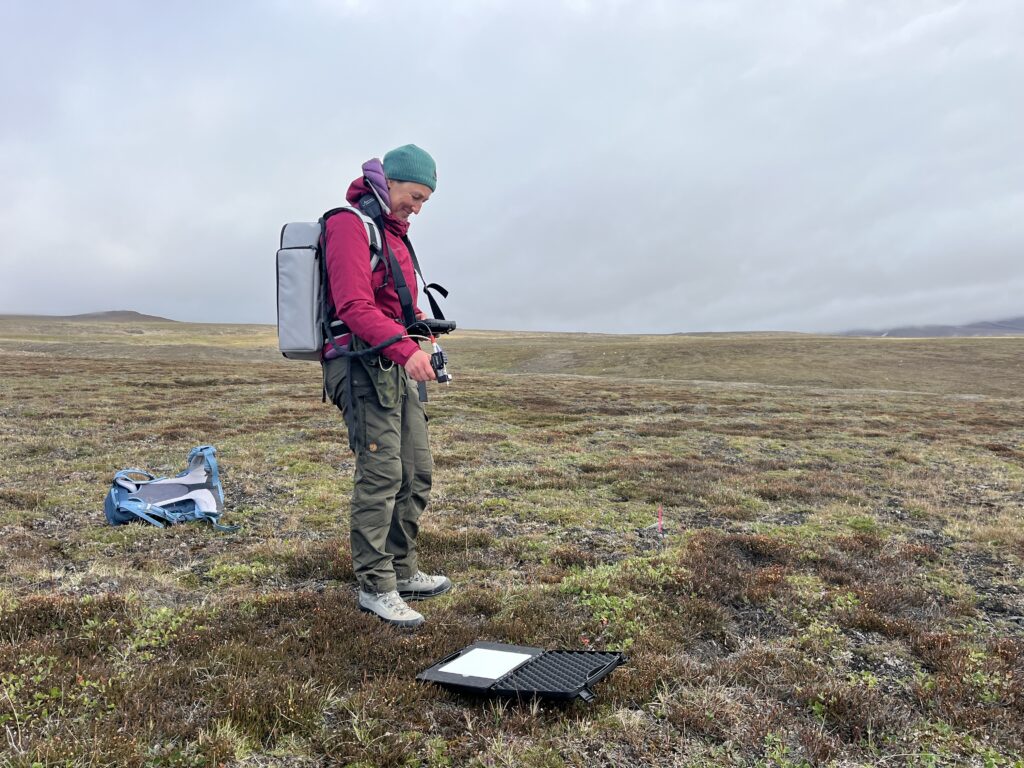
In my team we work on assessing plant, moss and lichen biodiversity and its functioning in the Arctic system. We integrate diverse methods, ranging from botanical work, eDNA, drone, satellite data to experiments and process-based modelling, from local to pan-arctic scale. We are interested in understanding drivers of change, such as different climate variables, but also drivers in the new Arctic, especially industrial development. We bring this information together to inform biodiversity policies and envision desirable futures and what is needed to achieve them. More recently, I engage in discussing geoengineering questions, with a focus on understanding effects of climate interventions on the Earth system more holistically and getting stake- and rights-holders to the table to express their perspectives. Much of my working time is dedicated to represent these aspects in the Conservation of Arctic Flora and Fauna group and support the Arctic science community in my new role as one of the vice-presidents of IASC. There is hope if we work together, but I strongly believe that we need to create positive mindsets and leadership. An example is this activity which I launched together with my group member Jakob Assmann (see Research link below).
What keeps you going?
Having worked in the Russian Arctic from 2008-22 and now in Greenland and also in Toolik, I am fascinated by the tundra and polar deserts, their simplicity, quietness, and yet complexity of mechanisms and processes that keep these system together. I am dedicated to bringing people and data together to envision a more positive future towards a sustainable Arctic. And to attract early careers to this fascinating system that needs all hands on deck to better understand, predict, but also manage Arctic futures. Finally, I have high respect for Indigenous People and strongly believe that co-producing knowledge and relaying this information to the global societies together can benefit Arctic futures. I see the 5th International Polar Year as a big opportunity to collaborate across disciplines and sectors and make a real impact, so definitely time for action!
What’s your message to the world?
Polar areas seem to be simple in biodiversity, but this biodiversity is adapted to extreme conditions, provides protection to the permafrost and supports Indigenous Peoples in the Arctic who depend on undisturbed land- and seascapes. Polar areas are key components of the Earth system – they are strongly exposed to the effects of global warming and undergo massive change. Because of their climatological relevance polar areas also become a prime target for technical solutions to combat global carbon emission effects in the Earth System. There is an urgent need for ethical research addressing the future of polar areas and informing policy makers.
Organisation: University of Zurich, Switzerland
Nationality:
 Swiss
Swiss
Disciplines: