Lily Thompson, MPhil
Polar Educators International
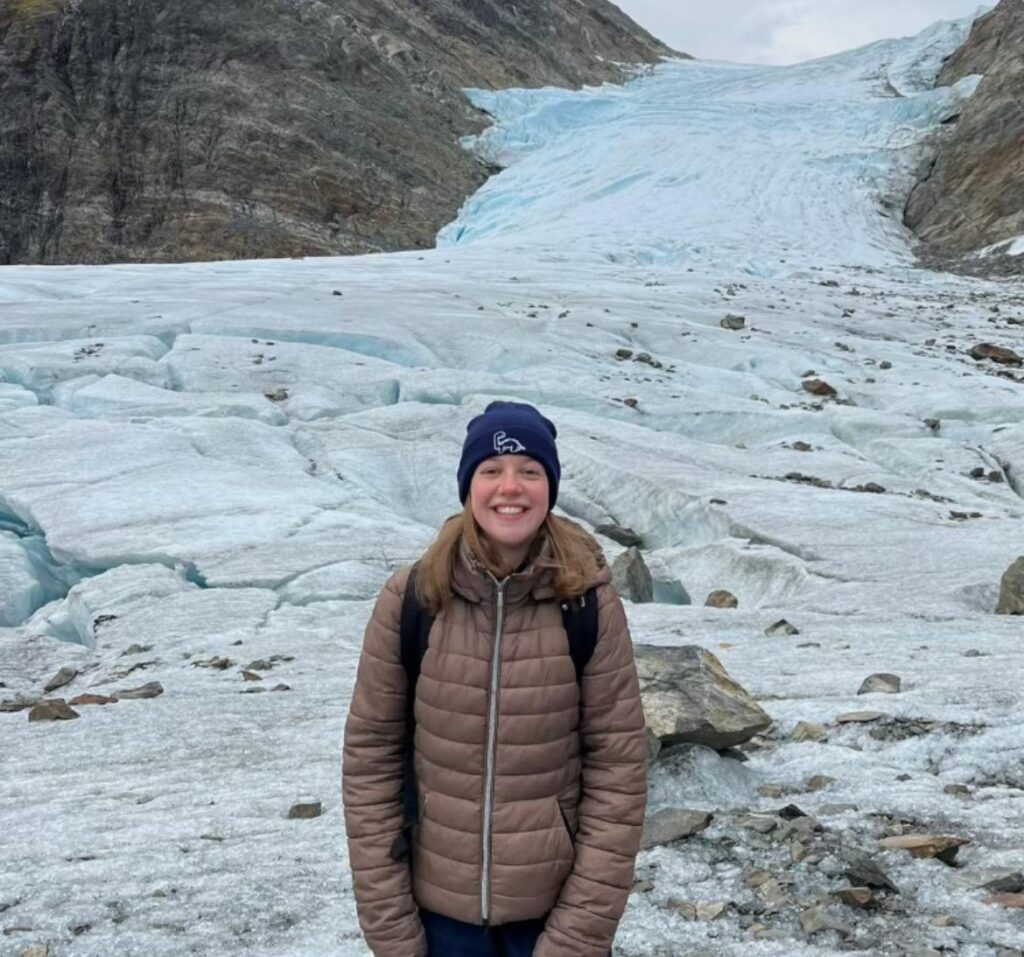
Lily is on Steindalsbreen Glacier, Norway. Lily hiked the 13 km round trip up the valley, which included some rocky climbs near the moraines. The meltwater lake in front of the glacier was a stunning reminder of the rapid changes that Arctic glaciers are experiencing. Lily was excited to walk onto the glacier, giving her the opportunity to see crevasses up close.
What’s the work that you do?
I am an early-career polar scientist and educator – I am particularly focused on Arctic science and policy. My interdisciplinary work considers how Arctic sea-ice decline has impacted shipping and sea routes across the region, as well as how mobilising boundaries will shape the future of the Arctic under climate change. I am a member of Polar Educators International, where I promote polar education through projects and at international conferences. I am passionate about science communication, delivering geography lessons to local schools and contributing to the Ice Core Crochet Project.
What keeps you going?
The polar regions are unique, complex, and stunning – their protection is important both politically and ecologically. Therefore, making polar research engaging and accessible is one of the most important aspects of work in this field. Research, science and policy can only have a significant and meaningful impact when it can be acted upon, so supporting research to be accessible for all communities, regardless of academic or professional background, is essential. I love that my work allows me to see the inspiration and engagement of the next generation with critical polar issues, and I am excited to see what the future holds in a polar career.
What’s your message to the world?
The science communication gap is very real and very threatening. Without effective communication, vital messages in scientific research are lost – they must reach all ears, not just those in academic communities. The value of polar education cannot be underestimated – the more people know, the more people can do. The polar regions are interconnected with the global community, so get involved! From reading a news report about sea ice, to watching a Frozen Planet documentary, engagement is the first step towards creating meaningful change. And finally, you are never too small to make a difference – follow your dreams, work hard, and you will be amazed at the things you can achieve.
Organisation: Polar Educators International
Nationality:
 UK
UK
Disciplines: