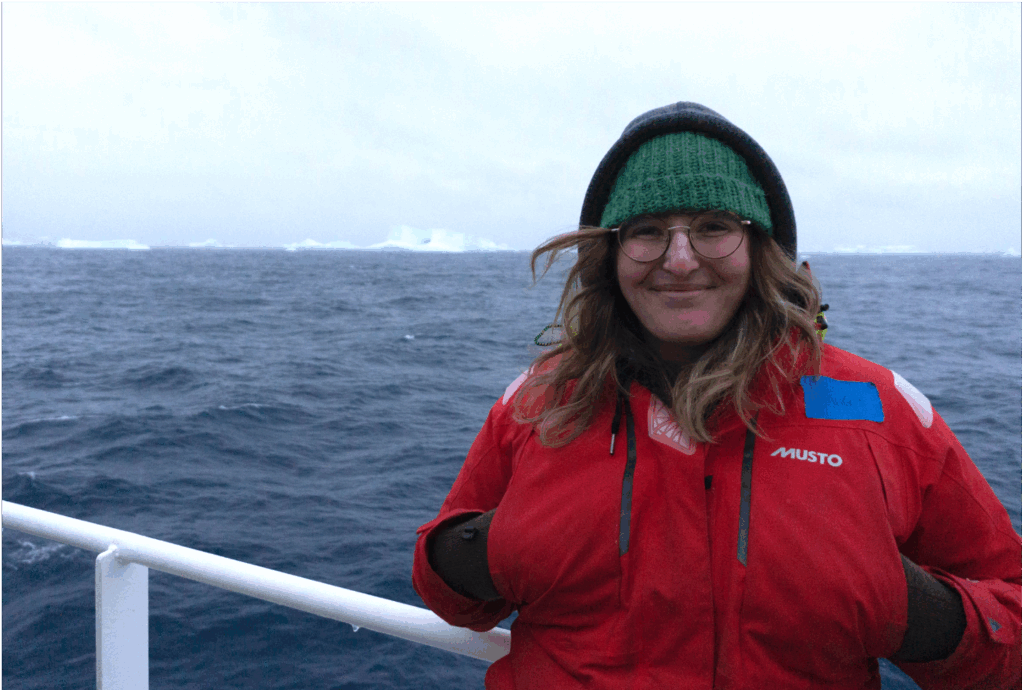
Margot Debyser, PhD
Laboratory of Marine Environmental Sciences (LEMAR), Brest, France
What’s the work that you do?
My work focusses on the changing chemistry of polar oceans. How nutrients and essential metals are supplied to marine life, and how these supply will change in the future. These essential nutrients constitute the very base of the food chain, so any changes at the bottom will have repercussions throughout.
What keeps you going?
I feel like this is a very important region to be studying right now. My first times at sea in the Arctic Ocean are some of the most memorable moments of my life. Witnessing first hand this remote world of ice compelled me to continue in the field; these oceans are actively changing during our lifetimes, and there is still so little knowledge and regulations to safeguard this environment and its people.
What’s your message to the world?
As scientists it sometimes feel like you are studying such a small part of a giant picture, and it can feel insignificant. But policies matter, and it takes a lot of momentum to get heard at a higher level and create the infrastructure needed to safeguard these environments. So we need a lot of voices from a lot of different backgrounds to get there, and I want to add mine to that in the ways that I can.
Organisation: Laboratory of Marine Environmental Sciences (LEMAR), Brest, France
Nationality:
 France
Disciplines:
Connect: