
Rebecca Tapper, MSc
Umeå University, Sweden
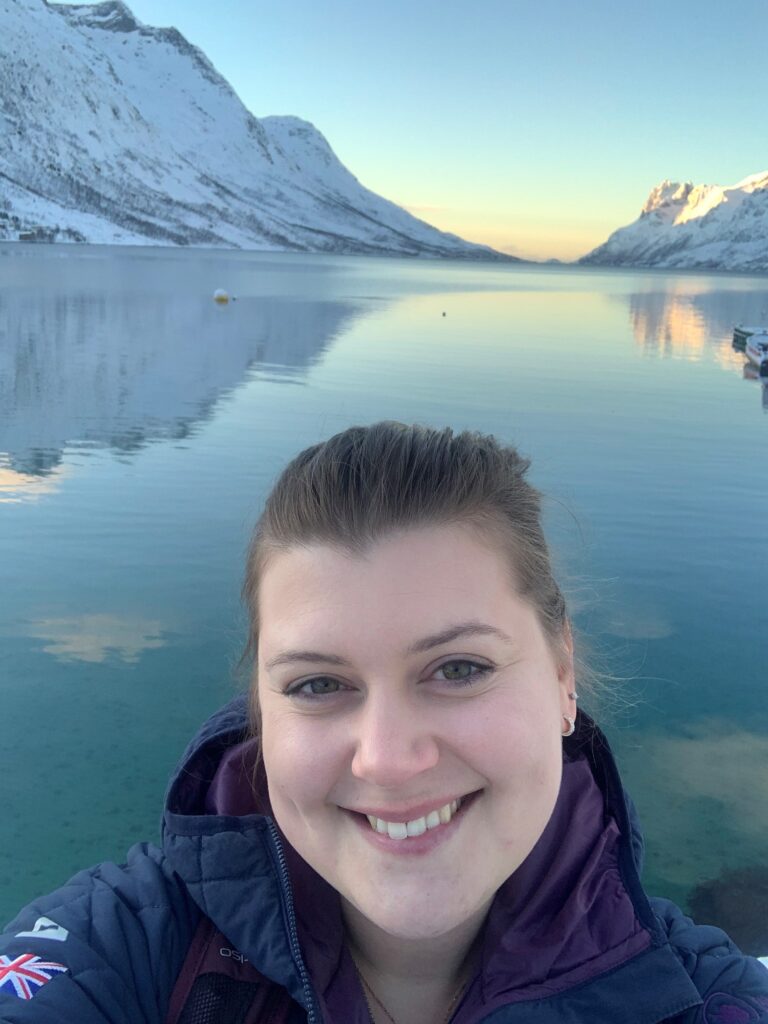
Rebecca is in Ersfjordboth outside Tromsø, Norway. She was there for a network meeting with the Arctic Fire Network regarding occupational health and climate change.
What’s the work that you do?
I am a Swedish PhD candidate in occupational health research. My project, ArctiHealth, focuses on improving our understanding of occupational cold exposure, including its health effects, associated risks, and effective risk management strategies. Working and living in Arctic environments can present significant challenges to human health, particularly for people who work outdoors. Even moderate cold exposure, defined as temperatures below +10°C, can impair cognitive function and performance, increase the risk of cold injuries and hypothermia, and in severe cases become life-threatening. Through my research, I aim to contribute knowledge that helps protect workers and communities in cold climates. In addition to my research, I serve on the board of APECS Sweden, where I support early-career polar researchers and promote collaboration within the polar science community.
What keeps you going?
At my core, I have always wanted to help people. Research gives me the opportunity to do that on a larger scale by generating knowledge that can improve health, safety, and wellbeing for workers and communities exposed to cold environments. I am driven by the challenge of understanding complex risks and translating scientific evidence into practical solutions. Contributing to a safer, healthier, and more resilient society, especially in the face of a changing climate, is what motivates me every day.
What’s your message to the world?
We cannot control every challenge the future will bring, but we can prepare for them through knowledge and collaboration. Research helps us better understand risks and respond to change. By learning from evidence and experience, we can build more resilient, sustainable, and equitable societies.
Organisation: Umeå University, Sweden
Nationality:
 Sweden
Disciplines: