Sandy Netzel
Explore Svalbard
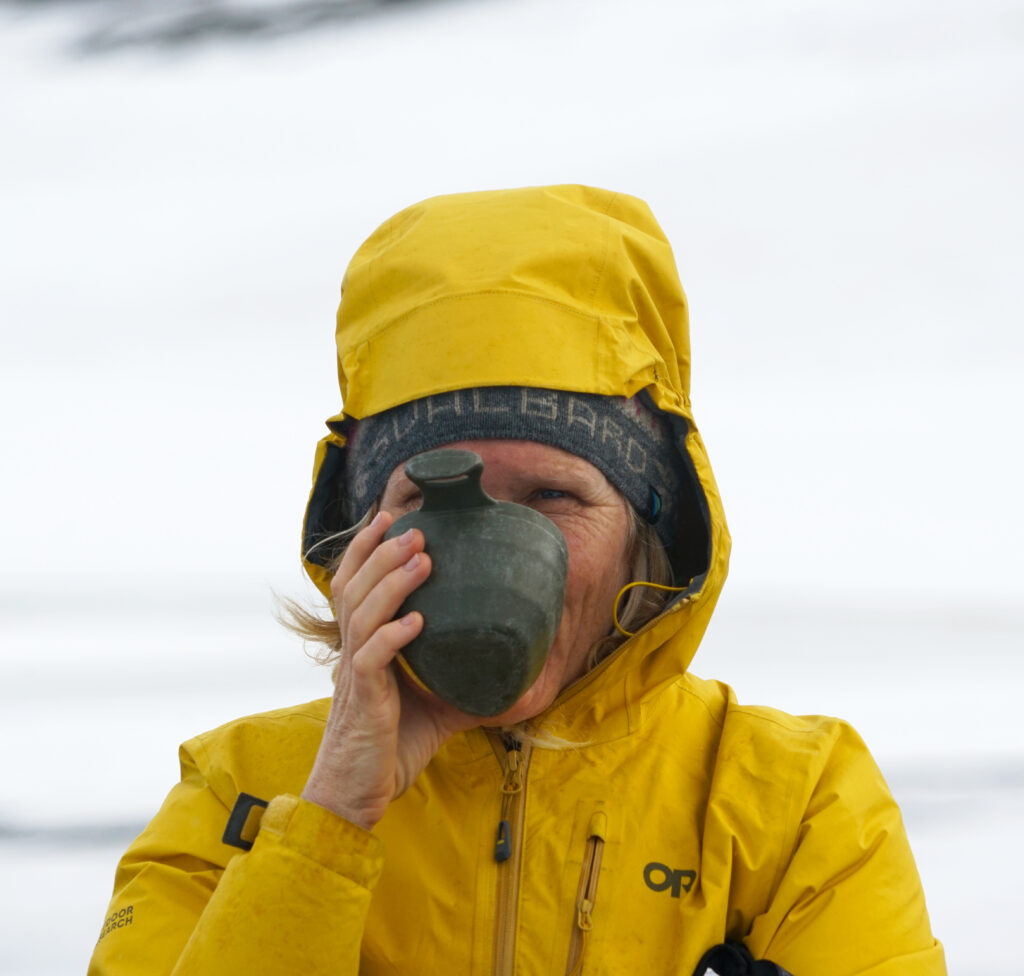
Sandy, in yellow gear, drinks from a cup at Sveabreen Camp in Svalbard.
What’s the work that you do?
I co-founded the Explore Svalbard project, an educational expedition program run in partnership with the Rabat American School in Morocco. The goal of the program is to engage students in experiential learning centered on the Arctic, climate change, and responsible exploration. Students spend six months prior to departure learning about the effects of climate change in the Arctic, meeting with experts in the field, discussing ways to reduce their impact while exploring, and developing team dynamics.
Students learn through direct engagement at our glacier camp in Svalbard environment through field-based activities on topics such as climate change, permafrost, glaciers, wildlife, and human impact in polar regions. Safety, group dynamics, leaving no trace, and student well-being in remote conditions are prioritized. In addition, I collaborate with educators to connect the field experience to classroom curricula, helping students build scientific understanding, teamwork skills, and resilience through real-world Arctic exploration.
What keeps you going?
The Explore Svalbard motto is Explore/Learn/Change & Share. Seeing students change and transform through their direct experience in Svalbard is motivating. Watching them move from an abstract understanding in the classroom to real curiosity and confidence while camping next to a glacier is deeply rewarding. I am passionate about creating outdoor learning environments where science becomes tangible and meaningful, especially the powerful landscape of the Arctic. I am motivated by the challenge of combining education, outdoor adventure, and safety in remote conditions, and by the opportunity to foster teamwork and resilience in young people. Ultimately, I do this because I believe experiential learning can change how students see the world and their role in it.
What’s your message to the world?
We protect what we love, what we understand, and we understand best through experience. Our students camp next to a glacier for a week. They hike, kayak, and snowshoe in the area while engaging in outdoor classroom activities. When they see change happening in real time, climate change stops being abstract. It becomes personal. We need more moments that connect people to nature and allow them to feel its power.
Organisation: Explore Svalbard
Nationality:
 Canada
Disciplines:
Connect: