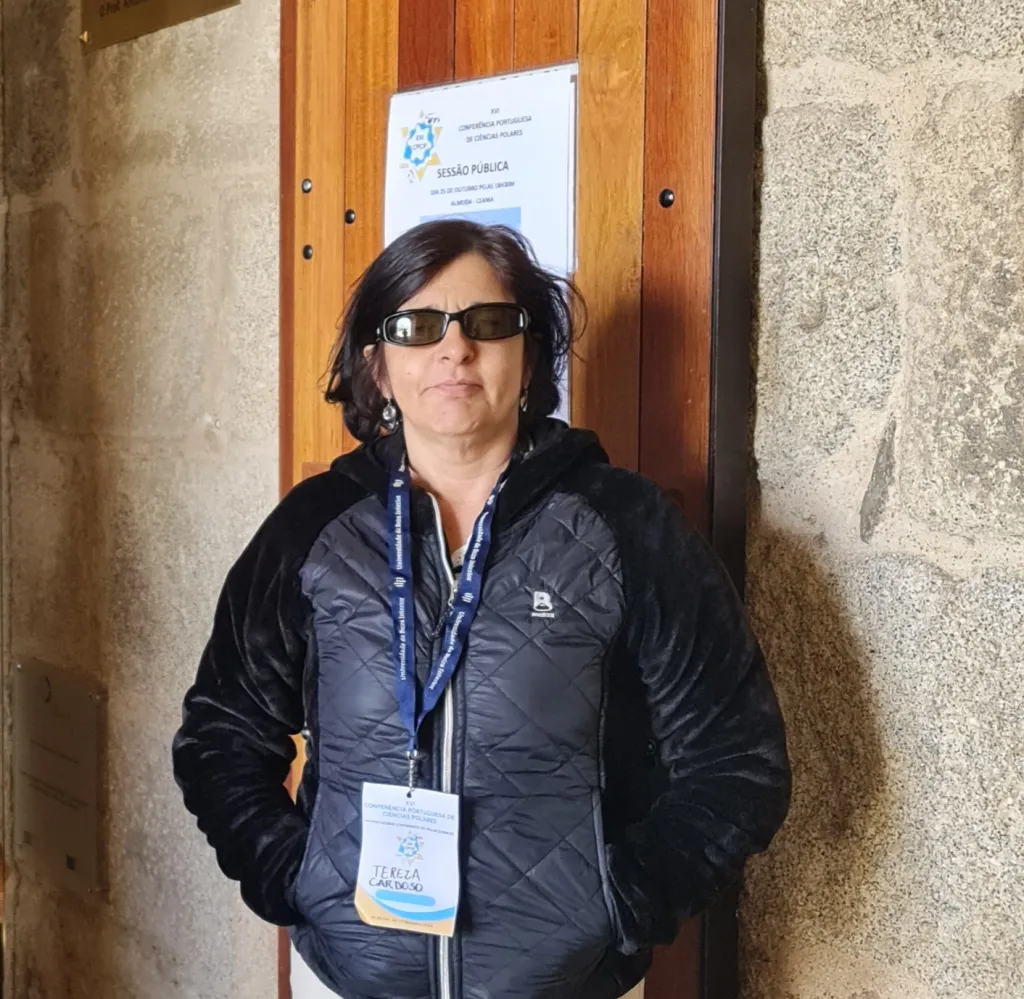
Teresa Cardoso, MSc, MA
NOVA University of Lisbon, Portugal; School of Social Sciences and Humanities (NOVA FCSH)
What’s the work that you do?
I am a PhD candidate in Geography, specializing in Territory and Development at NOVA-FCSH. My research focuses on Greenland within Arctic governance, and to Portugal’s role in the region. Alongside academia, I am the first Environmental Engineer in the Portuguese Maritime Administration, where I work on maritime environmental governance, sustainability, and policy implementation, bridging scientific research with public administration and decision-making at national and international levels.
What keeps you going?
What drives me forward is a deep belief that knowledge can play a meaningful role in building more just and sustainable futures. I am inspired by the challenge of linking research to real-world issues, particularly where governance, environment, and development intersect. I value interdisciplinary work, dialogue across different perspectives, and the effort to turn complex concepts into ideas that can guide policy and practice. I pursue this path because I see critical research not only as a way of understanding the world, but also as a way — even in small steps — of helping to change it for the better.
What’s your message to the world?
The polar regions remind us that no place on Earth is truly remote. They respond quickly and visibly to the decisions made far beyond their ice and oceans. The Arctic and Antarctic show how systems of governance, patterns of development, and human values are deeply entangled with the planet’s most fragile environments. My work explores this intersection, grounded in the conviction that climate change cannot be reduced to data alone — it is a question of power, responsibility, and ethics. Through the study of polar regions, I aim to reveal the hidden links between global decision-making and local realities, between environmental vulnerability and social structures. To understand the poles is to confront who we are, how we act, and whether we are willing to change course before critical limits are reached.
Organisation: NOVA University of Lisbon, Portugal; School of Social Sciences and Humanities (NOVA FCSH)
Nationality:
 Portugal
Disciplines: