
South Pole: 21-year old woman breaks Guiness World Record
27 February 2026
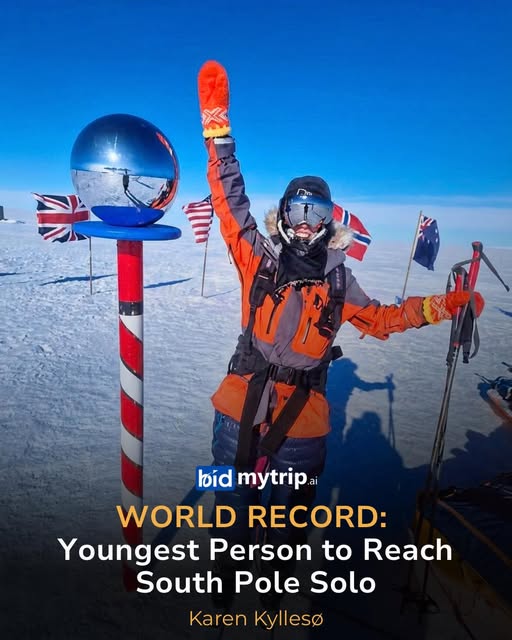
“It doesn’t matter how tall or grizzly you are,” says the youngest person to reach the South Pole unassisted, Karen Kylleso. She proves that “extraordinary” isn’t about how you are built; it’s about what you build inside.
https://www.cbsnews.com/news/karen-kylleso-youngest-person-south-pole-skis-team-says
Antarctica. 5 feet tall, 106 pounds, and a 220-pound sled. And now, a Guinness World Record Holder. 
On January 13, 2025, 21-year-old Karen Kyllesø officially became the youngest person in history to ski solo and unsupported to the South Pole. By reaching the bottom of the world at just 21 years and 249 days old, she shattered the previous record (held by France’s Pierre Hedan) by nearly six years.
The Grind Behind the Dream:
This wasn’t just a trip; it was years of calculated discipline. To help fund the expedition, she worked demanding shifts on Norwegian fish farms for her employer and primary sponsor, Mowi.
Her journey toward this moment actually began at age 15, when she became the youngest woman to cross the Greenland Ice Sheet. Between work shifts, she trained relentlessly, pulling tires in summer heat and intentionally gaining 10% of her body weight in muscle to handle the strain.
Strategic Preparation:
She left nothing to chance. Karen collaborated on making a custom low-friction pulk and an ultra-lightweight tent designed for extreme polar stability. She even completed a grueling 3-week solo survival test in northern Norway to prepare for the mental toll of complete isolation.
By the Numbers:
• 704 Miles (1,130 km): A grueling distance of solitary skiing across the world’s most unforgiving landscape.
• 220-lb (100kg) Pulk: Her sled weighed twice her own body weight, requiring immense strength to haul over ice.
• 53 Days, 22 Hours: Spent in complete isolation, navigating whiteouts and towering ice formations.
• -40°F Temperatures: Faced bone-chilling winds that can freeze skin in minutes, all while battling unexpected cold-induced asthma.
We are grateful to the Scientific Committee on Antarctic Research (SCAR) for supporting us.